DFW Storm Season Tree Prep: What Dallas-Fort Worth Homeowners Must Do Now
May 4, 2026
<!– ============================================================
WORDPRESS BLOG POST 6
TITLE: DFW Storm Season Tree Prep: What Dallas-Fort Worth Homeowners Must Do Before Spring Storms Hit
SLUG: storm-season-tree-prep-dallas-fort-worth
FOCUS KEYWORD: storm tree damage Dallas TX
SECONDARY KEYWORDS: storm tree preparation DFW, tree storm damage North Texas, fallen tree removal Dallas, hurricane season tree prep Texas, spring storm tree damage Fort Worth
META DESCRIPTION: DFW storm season is here. Learn exactly how to prep your trees before severe weather hits Dallas-Fort Worth — and what to do when a tree falls. Free 24/7 emergency response.
CATEGORY: Emergency Tree Service | Tree Care Tips | Dallas TX
TAGS: storm tree damage Dallas TX, storm tree prep DFW, fallen tree removal Dallas, emergency tree service DFW, North Texas storm season, tree care before storm
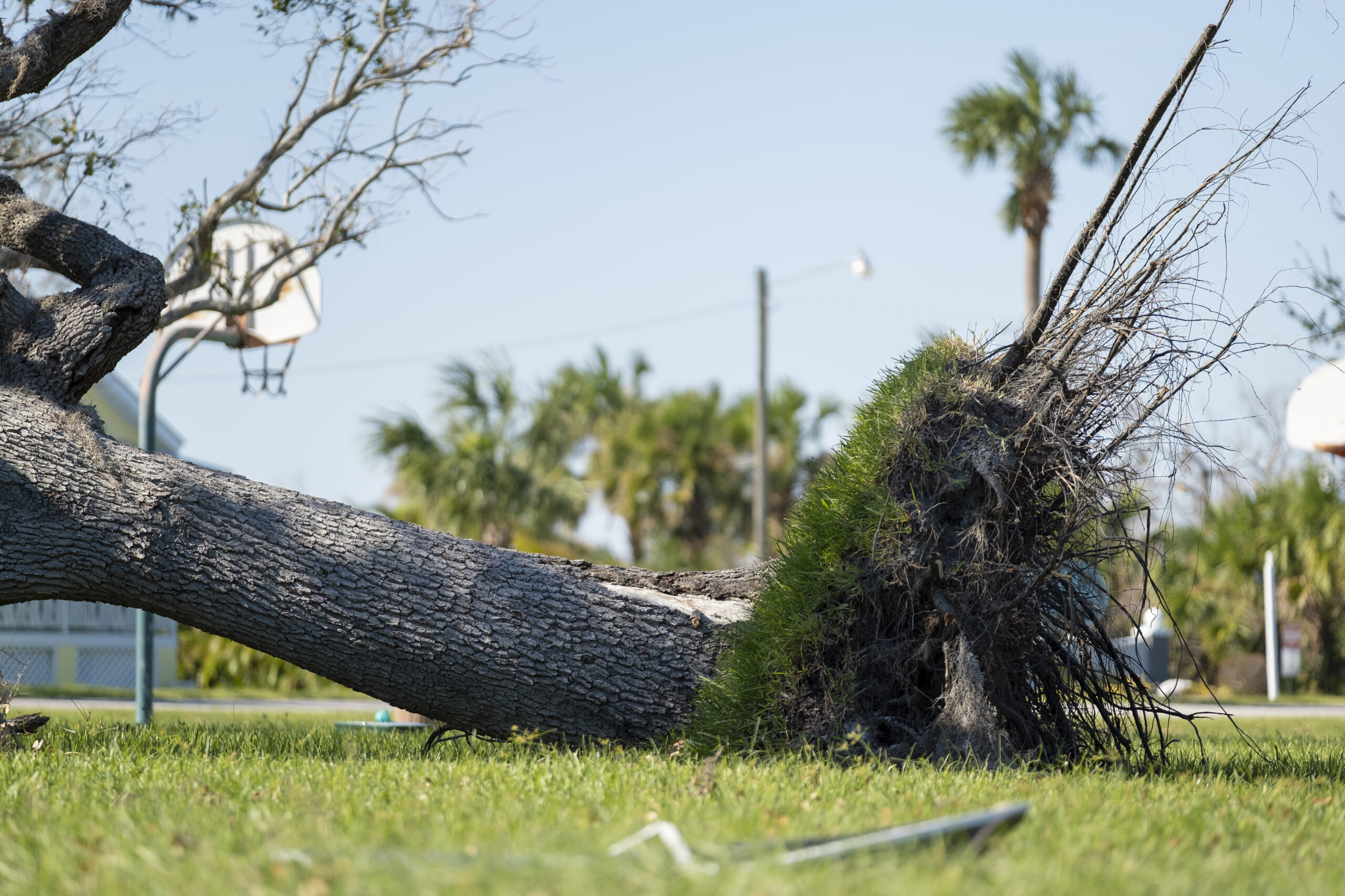
FEATURED IMAGE ALT: Storm-damaged tree after severe weather in Dallas Fort Worth Texas
============================================================
YOAST/RANK MATH SEO SETTINGS:
– SEO Title: DFW Storm Season Tree Prep: What Dallas-Fort Worth Homeowners Must Do Now
– Meta Description: DFW storm season is here. Learn exactly how to prep your trees before severe weather hits Dallas-Fort Worth — and what to do when a tree falls. Free 24/7 emergency response.
– Focus Keyword: storm tree damage Dallas TX
– Schema Type: Article
PASTE EVERYTHING BELOW THIS LINE INTO WORDPRESS “TEXT/HTML” EDITOR:
============================================================ –>
If you live in the Dallas-Fort Worth Metroplex, you already know: North Texas doesn’t mess around when it comes to severe weather. From April through October, DFW homeowners face some of the most dangerous storm conditions in the United States — supercell thunderstorms, straight-line winds exceeding 80 mph, large hail, and the occasional tornado. And when those storms hit, your trees are either an asset or a serious liability.
The good news? Most storm-related tree damage is preventable with the right preparation. At Quality Tree Service DFW, we respond to storm damage calls 24/7 across the entire Metroplex — but we’d much rather help you before a storm than scramble after one. This guide gives you a complete, actionable storm prep plan for your trees and tells you exactly what to do if damage occurs.
Why DFW Is One of the Most Dangerous Storm Zones in the U.S.
The Dallas-Fort Worth Metroplex sits squarely in “Tornado Alley” and is also part of what meteorologists call “Hail Alley” — the region spanning from west Texas to Nebraska that receives more large-hail events than anywhere else on Earth. Consider these facts:
- DFW averages 50+ severe thunderstorm days per year, more than most major U.S. cities
- North Texas has experienced some of the costliest hail and wind events in U.S. insurance history, including the April 2021 hailstorm that caused over $2 billion in damage across the Metroplex
- Straight-line derecho winds in DFW have been recorded at over 90 mph — easily enough to uproot mature trees
- The National Weather Service in Fort Worth issues more Severe Thunderstorm Warnings per year than almost any other NWS office in the country
The combination of large, mature trees on residential lots — many of them species with weak branch structure — and extreme weather conditions makes DFW a uniquely high-risk environment. Being proactive about tree care isn’t just a landscaping preference; it’s a genuine safety and financial decision.
Bookmark the NWS Fort Worth forecast page and sign up for Wireless Emergency Alerts on your phone so you’re never caught off guard.
Pre-Storm Tree Prep Checklist
Complete this checklist every spring before storm season peaks (ideally February–March) and again in late summer before the fall storm surge:
✅ Schedule a Professional Tree Assessment
Have a professional evaluate every mature tree on your property for structural defects, dead wood, disease, and proximity to structures. This is especially important for trees within falling distance of your home, vehicle, power lines, or a neighbor’s property. Our tree trimming team can assess and address hazards in the same visit.
✅ Remove Dead, Dying, or Hazardous Branches
Dead branches are the number-one cause of storm damage to structures. They’re already weakened and require virtually no wind to become projectiles. Any branch over your home, driveway, deck, or pool should be evaluated and removed if dead or structurally compromised.
✅ Thin Dense Canopies
A densely packed tree canopy acts like a sail in high winds, dramatically increasing the load on the trunk and root system. Crown thinning — selectively removing interior branches — reduces wind resistance without harming the tree’s health or appearance. This is one of the single most effective storm-prep measures for large shade trees.
✅ Remove Hazardous Trees Entirely
Some trees are simply too dangerous to keep. If a tree has multiple strike factors — significant lean toward a structure, major trunk decay, extensive dead wood, compromised root system — removal before storm season is the responsible choice. View our tree removal service.
✅ Cable or Brace High-Risk Trees
Trees with co-dominant stems (two large trunks growing from the same base at a narrow angle) are at high risk of splitting during storms. Structural support systems — steel cables and braces installed by a certified arborist — can significantly reduce this risk for otherwise healthy trees you want to preserve.
✅ Clear the Area Around Trees
Lawn furniture, grills, play equipment, and decorative items stored near trees become dangerous projectiles in high winds. Before a forecast storm, clear everything that could be thrown by wind or struck by a falling branch.
✅ Document Your Trees for Insurance
Take dated photos of every major tree on your property — including close-ups of the trunk, canopy, and overall position relative to structures. If a tree causes property damage in a storm, this documentation supports your insurance claim by establishing the tree’s prior condition.
How to Inspect Your Trees for Storm Risk
You don’t need an arborist certification to spot obvious warning signs. Walk your property and look for these red flags:
Ground Level — Check the Base
- 🔴 Soil heaving on one side of the trunk — indicates the root plate is lifting
- 🔴 Mushrooms or fungal growth at the base — sign of internal root rot
- 🔴 Cracks in the soil radiating from the trunk — root system may have already partially failed
- 🟡 Recent fill soil added over roots — can cause gradual root death
Trunk — Check for Structural Defects
- 🔴 Large cracks or splits running vertically along the trunk
- 🔴 Hollow areas or soft spots when you tap the trunk (a hollow sound indicates internal decay)
- 🔴 Visible cavities or large open wounds
- 🔴 Co-dominant stems with included bark — narrow V-shaped forks with bark growing inward between the stems
- 🟡 Leaning more than 15 degrees, especially if lean increased recently
Canopy — Check the Crown
- 🔴 Large dead branches (no leaves during growing season; gray, brittle bark)
- 🔴 Broken or hanging branches (“widow makers”) that haven’t yet fallen
- 🟡 Crossing or rubbing branches that create wound entry points
- 🟡 Sparse foliage on one side — may indicate root damage or disease
If you spot any red flags, call Quality Tree Service DFW at (214) 407-2385 for a professional assessment before storm season arrives.
High-Risk Tree Species in North Texas
Some tree species are significantly more prone to storm damage than others. If you have any of these on your property, they deserve extra attention before storm season:
| Tree Species | Risk Factor | Recommendation |
|---|---|---|
| Bradford / Callery Pear | Extremely weak branch structure; notorious for splitting in half during storms | Consider removal and replacement with a native species |
| Silver Maple | Fast-growing, brittle wood; large branches fail easily in wind | Aggressive crown thinning annually; removal if near structures |
| Arizona Ash | Short-lived, prone to disease; dead wood accumulates quickly | Annual dead-wooding; removal if declining |
| Eastern Cottonwood | Very large, fast-growing; root systems fail in saturated soil | Regular professional inspection; crown thinning |
| Hackberry | Susceptible to “witches’ broom” and weak branch attachments | Annual trimming to manage weak growth |
| Live Oak | Generally storm-resistant, but dense canopies can fail if unthinned | Crown thin every 3–5 years; avoid trimming Feb–June (oak wilt) |
| Pecan | Massive canopy acts as a wind sail; large limb drops common | Crown thinning and dead-wooding before storm season |
The Texas Oak Wilt Information Partnership and Texas A&M AgriLife Extension both offer excellent resources for identifying disease and structural issues in North Texas trees.
What to Do During a Storm
When a severe storm is actively occurring, your only job is to stay safe. Here’s what to do — and what NOT to do:
DO:
- Stay indoors and away from windows facing large trees
- Move vehicles out from under large tree canopies before the storm arrives if possible
- Monitor weather alerts via the NWS Fort Worth or a weather app with push notifications
- Know which room in your home is safest if a tree strikes (interior rooms away from the tree side)
DON’T:
- Go outside to check on trees during the storm
- Attempt to move or cut a fallen tree while lightning is still in the area
- Drive through areas with downed trees — downed power lines may be hidden by branches
- Touch any tree that is in contact with power lines
What to Do After a Storm: Step-by-Step
The hour after a storm passes is often when the most costly mistakes happen. Follow this sequence:
Step 1: Safety Assessment First
Before doing anything, scan your property from a safe distance. Look for downed power lines, leaning trees that could still fall, and structural damage to your home. If power lines are down, call Oncor at 1-888-313-4747 immediately and stay well clear.
Step 2: Document Everything
Take photos and video of all damage before anything is moved or cleaned up. This is critical for insurance claims. Capture the fallen tree, damage to structures, the tree’s stump/root zone, and any prior condition evidence you have.
Step 3: Call Quality Tree Service DFW
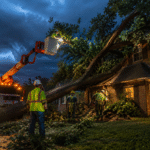
We offer 24/7 emergency response across the entire DFW Metroplex. Our crew will safely remove fallen or leaning trees, clear debris from structures, and provide emergency tarping if needed. Learn about our emergency tree service.
📞 (214) 407-2385 — Call now, we answer 24/7.
Step 4: Contact Your Insurance Company
File your claim promptly with your homeowner’s insurance. Most policies require timely notification. We can provide written documentation of the damage and our assessment of the tree’s condition to support your claim.
Step 5: Assess Remaining Trees
After a major storm, trees that appear undamaged may have suffered hidden structural damage — root disruption, internal cracking, or partial branch failures that aren’t obvious from the ground. Schedule a professional post-storm assessment for any tree within striking distance of your home or vehicles.
Navigating Insurance After Storm Tree Damage
Understanding what your homeowner’s insurance does and doesn’t cover can save you thousands of dollars in the aftermath of a storm. Here’s a general guide:
| Situation | Typically Covered? | Notes |
|---|---|---|
| Tree falls on your home and causes damage | ✅ Usually YES | Both removal and structural repairs typically covered |
| Tree falls on a detached garage or fence | ✅ Often YES | Depends on policy; detached structures may have sublimits |
| Tree falls on your vehicle | ✅ YES (auto insurance) | Covered under your comprehensive auto policy, not homeowners |
| Tree falls on a neighbor’s property | ⚠️ Complicated | Generally neighbor’s insurance covers their damage; yours may cover yours |
| Tree falls in yard — no property damage | ❌ Usually NO | Considered a maintenance expense |
| Dead/diseased tree falls (neglect) | ❌ Often NO | Insurers may deny if tree condition was a known hazard |
The Insurance Information Institute provides a detailed breakdown of tree-related homeowner’s insurance claims. We recommend reviewing your policy before storm season and understanding your deductible so you’re not surprised after an event.
💡 Important: This is exactly why proactive tree care matters for insurance purposes. A dead tree that falls and causes damage can be denied coverage if an insurer determines the hazard was known and not addressed. Documented annual maintenance is your best protection.
Storm Tree Risk Highlights Across DFW
While storm risk is significant throughout the Metroplex, certain areas and neighborhoods have specific considerations:
- Dallas (Central/North Dallas): Dense urban tree canopy with many aging trees planted in tight easements. Power line contact is a common issue after storms. See our Dallas tree services.
- Plano & Frisco: Rapid growth means many trees were planted near structures during development booms and are now reaching full size. Bradford pears are common and notoriously fragile. Frisco tree services →
- McKinney & The Colony: Clay soils mean trees in these areas are particularly vulnerable to root failure after heavy rain. McKinney tree services →
- Flower Mound & Lewisville: Many mature oak stands near Lake Lewisville. These are valuable trees worth protecting with pre-storm trimming. Flower Mound tree services →
- Southlake & Colleyville: Large lots with specimen trees. The cost of a crane removal after a storm on these premium properties can be enormous — prevention is far cheaper.
- Grapevine & Coppell: Mix of mature and newer trees; significant Bradford pear population. Grapevine tree services →
Quality Tree Service DFW: 24/7 Storm Response Across the Entire Metroplex
Whether you need pre-storm tree trimming and hazard removal, or you’re dealing with a fallen tree at 3 AM after a severe storm — Quality Tree Service DFW is ready to respond. We’re locally based in Denton and serve the entire Dallas-Fort Worth area with fast, professional, fully insured service.
- ✅ 24/7 emergency response — we answer every call
- ✅ Free storm damage assessments
- ✅ Insurance documentation provided
- ✅ Fully licensed, insured & bonded
- ✅ Serving all of DFW — Dallas, Plano, Frisco, McKinney, Lewisville, Flower Mound, Grapevine, Coppell, Southlake, Colleyville, The Colony & more
📞 Emergency Line: (214) 407-2385 — 24/7
👉 Schedule a Pre-Storm Tree Assessment