How to Identify Tree Diseases That Require Immediate Attention in Texas
April 3, 2026
Recognizing the Warning Signs: Tree Diseases in North Texas
The trees that line Dallas-Fort Worth neighborhood, from the majestic live oaks in Southlake to the towering pecans in Denton, face unique health challenges. Texas’s climate, with hot summers, occasional droughts, and variable rainfall, creates ideal conditions for various tree diseases that can quickly turn deadly if left untreated.
Many homeowners don’t realize their tree is sick until it’s too late. By the time symptoms become obvious, the disease may have progressed beyond treatment. Understanding how to spot early warning signs can mean the difference between saving a valuable tree and facing costly removal.
At Quality Tree Service DFW, our certified arborists diagnose and treat tree diseases throughout Denton County and the greater Dallas-Fort Worth Metroplex. We’ve seen how early intervention saves trees, prevents disease spread, and protects property values.
This comprehensive guide will help you identify common tree diseases in Texas, recognize symptoms that require immediate attention, and know when to call a professional arborist.
Understanding Tree Diseases in the DFW Climate
North Texas presents unique challenges for tree health:
Climate Factors
- Hot, dry summers stress trees and weaken defenses
- Inconsistent rainfall creates drought stress
- Clay soils can cause root problems
- Urban heat islands in Dallas-Fort Worth increase stress
- Rapid temperature swings shock trees
Common Disease Types
- Most common in Texas
- Thrive in warm, humid conditions
- Spread through spores
- Often enter through wounds
Bacterial Infections:
- Spread through insects or wounds
- Can progress rapidly
- May affect entire tree quickly
Viral Diseases:
- Less common but serious
- Usually incurable
- Spread by insects
Environmental Stress:
- Not technically disease but causes similar symptoms
- Weakens trees making them susceptible to disease
- Often mimics disease symptoms
Visual Signs Your Tree Is Sick
Early detection is critical. Look for these warning signs:
Leaf Symptoms
Discoloration:
- Yellow leaves (chlorosis): Nutrient deficiency or root problems
- Brown spots: Fungal infection
- Black spots: Bacterial infection or fungal disease
- Purple or red tints: Stress or disease
- Mottled patterns: Viral infection
Unusual Leaf Drop:
- Early leaf drop (before fall)
- Sudden defoliation
- Loss of leaves on specific branches
- Progressive defoliation pattern
Deformed Leaves:
- Curled or twisted leaves
- Abnormal size (too small or large)
- Irregular shapes
- Galls or growths on leaves
Bark Problems
Discoloration:
- Dark staining
- White or gray patches
- Orange or red areas
- Unusual coloring
Texture Changes:
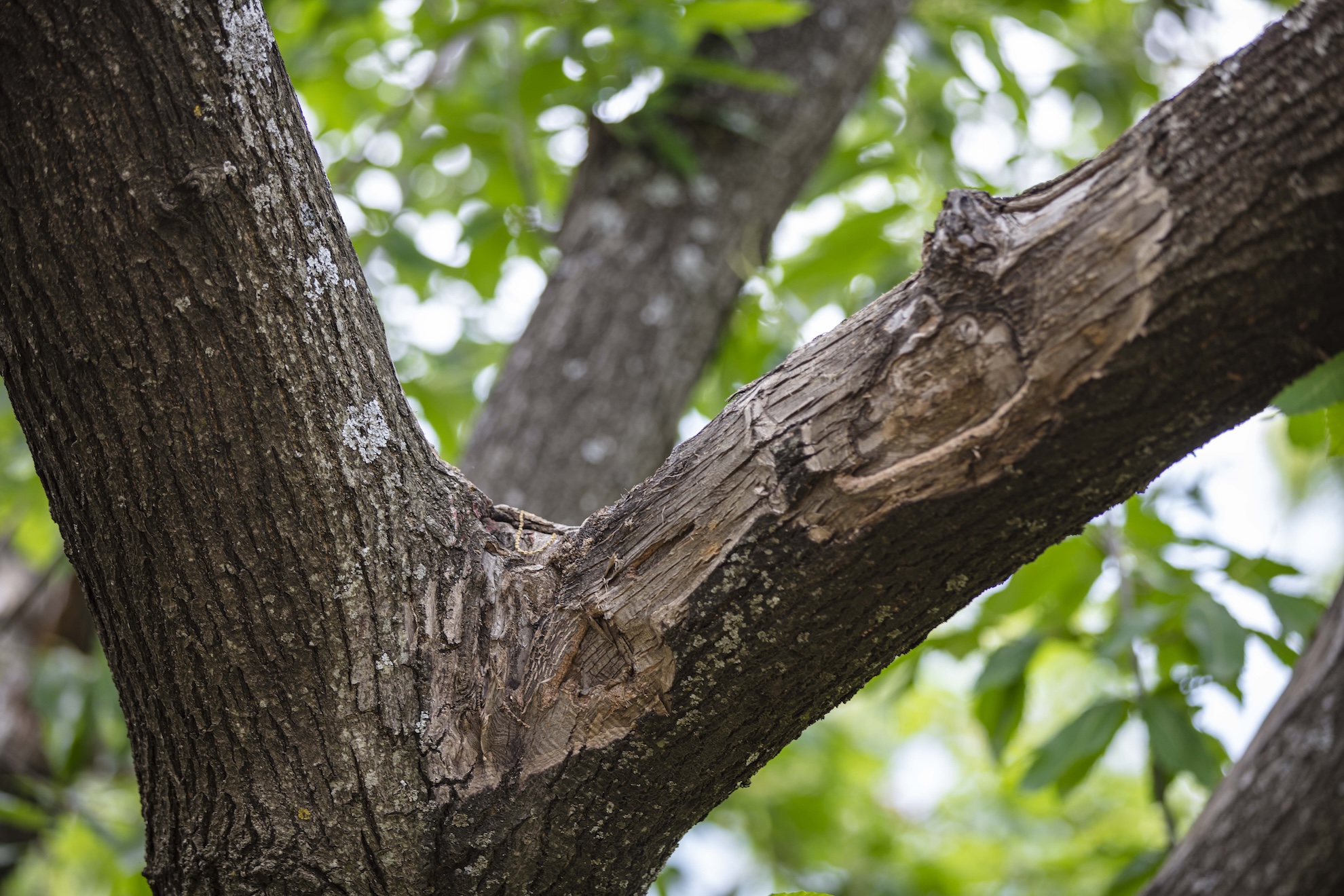
- Cracking or splitting
- Peeling or flaking
- Soft or spongy areas
- Missing patches
Physical Damage:
- Cankers (sunken dead areas)
- Swelling or bulges
- Oozing sap
- Holes or cavities
Branch and Trunk Issues
Dieback:
- Dead branches (no leaves/buds)
- Progressive death from tips inward
- Entire sections dying
- Asymmetric crown
Fungal Growth:
- Mushrooms at base
- Shelf fungi on trunk
- Powdery substances
- Visible mold or mildew
Structural Concerns:
- Cracks in trunk
- Splits in major limbs
- Leaning suddenly
- Cavities or hollows
Root and Base Symptoms
Visible Root Problems:
- Exposed roots
- Root decay
- Mushrooms near base
- Soil mounding or cracking
Base Issues:
- Soft or spongy trunk base
- Fungal growth at soil line
- Sawdust or frass around base
- Unusual odors
Common Tree Diseases in Texas
Understanding specific diseases helps identify what your tree faces:
Oak Wilt – MOST SERIOUS in Texas
Species Affected:
- Live oaks (most susceptible)
- Red oaks (Spanish oak, Shumard oak)
- Bur oaks (somewhat resistant)
Symptoms:
- Rapid leaf browning (starts at leaf edges)
- Leaves drop while still attached to branches
- Defoliation progresses quickly
- Fungal mats under bark (beetles attracted)
- Death can occur in weeks (red oaks) to months (live oaks)
Why It’s Urgent:
- Spreads through root grafts to nearby oaks
- Can kill entire oak populations
- Treatable if caught early
- Pruning timing critical (never Feb-June)
What to Do:
- Call certified arborist immediately
- Prevent spread to neighboring oaks
- Consider fungicide treatment
- May require tree removal
Hypoxylon Canker
Species Affected:
- Live oaks
- Post oaks
- Other oak species
- Pecan trees
Symptoms:
- Bark sloughing off in sheets
- Dusty, powdery substance under bark
- White to gray or brown powder
- Large areas of dead bark
- Often follows severe drought
Why It’s Urgent:
- Indicates severe stress
- Tree is likely dying
- Can pose safety hazard
- No effective treatment
What to Do:
- Have arborist assess safety
- Consider removal if significantly affected
- May be hazardous to keep
Fire Blight (Affects Ornamentals)
Species Affected:
- Pear trees (especially Bradford pear)
- Apple trees
- Other rosaceous plants
Symptoms:
- Branches appear scorched
- Shepherd’s crook (bent branch tips)
- Blackened leaves remain attached
- Cankers on branches
- Bacterial ooze in spring
Why It’s Urgent:
- Spreads rapidly during spring
- Can kill entire tree in one season
- Extremely contagious
- Requires specific pruning practices
What to Do:
- Prune infected branches immediately
- Disinfect tools between cuts
- May require antibiotic treatment
- Remove severely infected trees
Ball Moss and Spanish Moss
Species Affected:
- Most trees can host it
- Particularly live oaks
- Pecans
- Elms
Symptoms:
- Gray-green clumps in branches
- Dense masses in tree crown
- Hanging strands (Spanish moss)
Why It’s Concerning:
- Not technically disease (epiphyte)
- Can indicate poor tree health
- Blocks light and reduces photosynthesis
- Adds weight to branches
- Does not directly kill but stresses trees
What to Do:
- Usually not urgent
- Can be physically removed
- Copper-based sprays effective
- Improve tree health
Cotton Root Rot
Species Affected:
- Many hardwood species
- Ornamental trees
- Fruit trees
Symptoms:
- Sudden wilting in summer
- Bronze or yellow foliage
- Rapid death (days to weeks)
- White fungal growth on roots
- Affects entire tree at once
Why It’s Urgent:
- No effective cure
- Fatal to affected tree
- Soil remains contaminated
- Can affect future plantings
What to Do:
- Remove tree
- Test soil before replanting
- Choose resistant species for replacement
- Improve soil health
Bacterial Leaf Scorch
Species Affected:
- Live oaks
- Red oaks
- Shumard oaks
- Elm trees
Symptoms:
- Marginal leaf browning
- Yellowing between veins
- Premature leaf drop
- Slow decline over years
- Dieback of branches
Why It’s Urgent:
- Incurable
- Spreads to other trees
- Weakens tree significantly
- No effective treatment yet
What to Do:
- Confirm diagnosis with arborist
- Maintain tree health
- Monitor for safety issues
- May require eventual removal
Dutch Elm Disease
Species Affected:
- American elm
- Other elm species
Symptoms:
- Yellowing and wilting leaves
- Curling leaves
- Branch dieback
- Brown streaking in sapwood
- Progressive crown death
Why It’s Urgent:
- Fatal disease
- Spreads quickly
- No cure once infected
- Can spread to other elms
What to Do:
- Remove infected trees promptly
- Treat healthy elms preventively
- Destroy infected wood
- Control elm bark beetles
When to Call an Arborist Immediately
Some symptoms require urgent professional attention:
Emergency Situations
Call immediately if you notice:
- Sudden Wilting or Collapse:
- Entire tree or large section wilts overnight
- Leaves turn brown rapidly
- Tree appears stressed within days
- Fungal Fruiting Bodies:
- Mushrooms at tree base
- Shelf fungi on trunk
- Conks or brackets on branches
- Any fungal growth on structural parts
- Structural Concerns:
- Cracks appearing in trunk
- Major limbs splitting
- Sudden leaning
- Large dead branches
- Oak Trees in Spring:
- Any symptoms on oaks Feb-June
- Suspected oak wilt
- Fresh wounds on oaks during this period
- Rapid Disease Progression:
- Symptoms worsening daily
- Significant change within weeks
- Multiple branches dying simultaneously
Schedule Professional Assessment For:
Non-Emergency But Important:
- Gradual Decline:
- Slowly thinning crown
- Reduced growth over seasons
- Smaller than normal leaves
- Less vigorous appearance
- Unusual Symptoms:
- Symptoms you can’t identify
- First-time disease in your area
- Multiple trees affected
- Spreading between trees
- Valuable Trees:
- Mature specimens
- Heritage or landmark trees
- Trees adding significant property value
- Irreplaceable specimens
- Preventive Care:
- Annual health inspections
- Post-storm assessments
- Pre-purchase inspections
- After construction near trees
Treatment Options for Tree Diseases
What can be done depends on the disease and stage:
Fungicide Treatments
When Effective:
- Preventive for oak wilt
- Some leaf spot diseases
- Certain root diseases
- Early-stage infections
Application Methods:
- Soil injection
- Trunk injection
- Foliar spray
- Root drenching
Antibiotic Treatments
Limited Uses:
- Fire blight in some cases
- Certain bacterial infections
- Usually supplementary treatment
Pruning and Sanitation
Always Important:
- Remove infected branches
- Improve air circulation
- Reduce disease spread
- Prevent further infection
Critical Practices:
- Disinfect tools between cuts
- Proper timing (avoid high-spread seasons)
- Correct cutting techniques
- Dispose of diseased material properly
Soil and Nutrition Management
Supporting Tree Health:
- Correct nutrient deficiencies
- Improve drainage
- Adjust pH if needed
- Enhance beneficial microbes
Tree Removal
When Necessary:
- Disease is fatal and incurable
- Tree poses safety risk
- Prevent spread to other trees
- Too far progressed for treatment
Quality Tree Service DFW can assess whether treatment or removal is the best option.
Prevention Strategies for Tree Health
Preventing disease is easier and cheaper than treatment:
Regular Maintenance
Annual Inspections:
- Certified arborist evaluation
- Disease and pest monitoring
- Structural assessment
- Seasonal care recommendations
Proper Pruning:
- Remove dead/diseased wood
- Improve air circulation
- Reduce stress on tree
- Correct timing for species
Appropriate Watering:
- Deep, infrequent watering
- 1-1.5 inches per week during growing season
- Adjust for rainfall
- Reduce in winter
Mulching:
- 2-4 inches of organic mulch
- Keep away from trunk
- Retain soil moisture
- Moderate soil temperature
- Suppress weeds
Stress Reduction
Minimize Tree Stress:
- Avoid soil compaction
- Protect during construction
- Don’t change grade near trees
- Avoid trunk damage
- Prevent herbicide drift
Proper Planting:
- Choose disease-resistant varieties
- Match species to site
- Proper planting depth
- Adequate spacing
- Site-appropriate selection
Seasonal Disease Prevention in DFW
Winter (December-February):
- Dormant oil sprays for some pests
- Structural pruning (except oaks)
- Plan for spring care
- Monitor for winter damage
Spring (March-May):
- NEVER prune oaks
- Monitor for diseases
- Begin fertilization
- Inspect for emergence pests
Summer (June-August):
- Deep watering during drought
- Watch for heat stress
- Monitor oak wilt symptoms
- Prevent herbicide damage
Fall (September-November):
- Resume oak pruning (after September)
- Fall fertilization
- Post-storm inspection
- Prepare for winter
Frequently Asked Questions
How can I tell if my tree is dead or just dormant?
Scratch a small area of bark on a branch. Green or moist tissue underneath means the branch is alive. Brown and dry means dead. Test multiple branches. Also look for buds in spring—their absence on significant portions indicates death.
Can a diseased tree recover on its own?
Rarely. A healthy tree might overcome some minor infections, but most diseases require intervention. Waiting usually allows the disease to progress, making treatment harder or impossible.
Are tree diseases contagious to other trees in my yard?
Many are, especially oak wilt, Dutch elm disease, and fire blight. Some diseases spread through root grafts, insects, or airborne spores. Quick action prevents spread.
How much does tree disease treatment cost?
Costs vary widely based on disease type, tree size, and treatment needed. Diagnostic consultations typically start around $100-200. Treatments range from $200-$2,000+. Removal costs $500-$5,000+ depending on size.
Should I remove a diseased tree or try to treat it?
This depends on: disease type (some are incurable), tree value, treatment cost vs. removal cost, risk of spreading, and tree’s overall health. A certified arborist can advise on the best course.
Can I use home remedies or general fungicides?
Not recommended. Tree diseases require specific treatments, proper timing, and correct application methods. DIY treatments often waste money and delay proper care. Some diseases (like oak wilt) require professional equipment for effective treatment.
How long does treatment take to show results?
Varies by disease and treatment. Some show improvement in weeks, others take an entire growing season. Preventive treatments may show no visible change but protect the tree. Patience is important—trees heal slowly.
Will my homeowner’s insurance cover tree disease treatment or removal?
Generally no, unless the diseased tree damages an insured structure. Maintenance and preventive care are typically homeowner responsibilities. Check your specific policy.
Conclusion: Protecting Your DFW Trees
Tree diseases in the Dallas-Fort Worth area can progress quickly, especially in our challenging climate. Early detection and professional treatment offer the best chance of saving valuable trees and preventing disease spread.
The key to protecting your trees:
- Learn to recognize common disease symptoms
- Monitor trees regularly, especially during growing season
- Act quickly when problems appear
- Work with certified arborists
- Invest in preventive care
Quality Tree Service DFW’s certified arborists have extensive experience diagnosing and treating tree diseases throughout Denton County and the DFW Metroplex. We provide:
- Professional disease diagnosis
- Treatment recommendations
- Preventive care programs
- Safe tree removal when necessary
- Expert guidance for tree health
Don’t wait until it’s too late. Contact Quality Tree Service DFW:
- Free Tree Health Consultations: (214) 407-2385
- Request Assessment: Get Started
- Service Area: Denton, Lewisville, Flower Mound, Dallas, and throughout DFW
Healthy trees add beauty and value to your property. Let us help you protect them.